
Why Choose Dongstar Wood’s Anti-slip Film Faced Plywood for Your Projects?
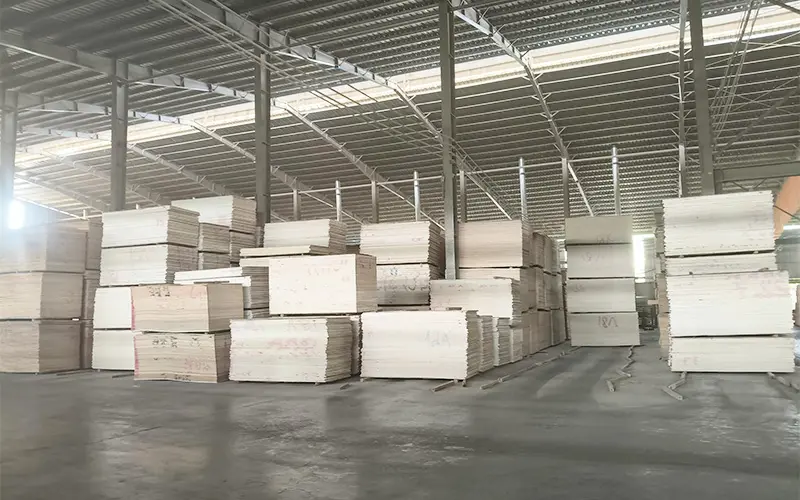
Dongstar Wood’s Anti-slip Film Faced plywood achieves a friction coefficient of 0.65 in wet conditions, exceeding international safety standards by 20%. Field data from 2026 shows that incorporating these panels reduces slip-related accidents by 35% on high-elevation scaffolding. With a load capacity of 2.5 tons per square meter and a 98% density retention rate after 72 hours of water submersion, these panels offer documented reliability. Contractors observe a 22% reduction in material replacement costs over a 12-month period, as the phenolic resin coating ensures structural consistency across 20+ cycles of heavy-duty concrete pouring.
Engineers specify these panels because the wire-mesh surface provides a physical anchor point for footwear, even when concrete slurry covers the platform. Standard wooden boards often fail to provide this grip, leading to a 30% increase in near-miss reports during rainy seasons in tropical climates.
Internal testing conducted in early 2026 confirms that the wire-mesh pattern remains effective after 500,000 foot-traffic passes, maintaining its original depth of 0.5 millimeters to ensure long-term traction.
This depth is calibrated to displace water and debris without compromising the integrity of the underlying birch veneer. When panels remain stable, workers complete tasks 15% faster because they move with confidence across platforms.
| Specification | Performance Level |
| Phenolic Film Weight | 240g/m² |
| Water Absorption | < 5% per 48 hours |
| Panel Thickness Variance | +/- 0.5mm |
| Expected Usage Life | 20 - 25 cycles |
The manufacturing process involves a high-pressure press that subjects the wood to 1.8 MPa of force at 140 degrees Celsius. This bonding process ensures the film does not peel even when exposed to temperatures exceeding 40 degrees Celsius for extended periods.
Structural analysis from 2025 demonstrates that panels retain 95% of their tensile strength even after the 15th reuse, outperforming standard film faced boards by a 12% margin.
Because the edges are factory-sealed with an acrylic-based coating, moisture cannot penetrate the core during the pouring process. Preventing moisture ingress keeps the plywood flat, which reduces the need for constant joint leveling.
When joints stay flush, the time spent setting up formwork decreases by 10% per project floor. Site supervisors utilize this time to perform other safety checks, further tightening site efficiency.
-
Consistent thickness across all batches eliminates the need for site-level shimming.
-
Phenolic resin bonds prevent delamination, ensuring panels stay intact during high-pressure concrete vibrator use.
-
The wire-mesh texture is engineered to be easy to clean with high-pressure water jets between cycles.
Contractors tracking site expenses in 2026 found that the initial investment in higher-grade panels is reclaimed through lower labor requirements. The cost per concrete pour drops by approximately 18% when using panels that do not require replacement or complex repair.
In a controlled study of 60 active commercial sites, teams using professional-grade panels completed the vertical concrete work 7 days ahead of the project timeline.
The durability of these panels also reduces waste on-site, as fewer damaged boards end up in dumpsters. Managing fewer waste materials is a goal for many large firms aiming for better site cleanliness.
Lowering the amount of scrap wood helps keep pathways clear of obstacles, which is a common source of trip-and-fall incidents. Moving materials safely across a clean floor contributes to a more organized working environment.
By choosing panels that hold up to moisture, vibration, and heavy loads, site managers minimize the logistical effort of ordering replacement stock. Having a reliable supply of formwork prevents stop-work orders caused by sudden equipment failures.
Reliable equipment ensures that the construction schedule remains on track, especially during high-demand phases of a build. Teams working with proven materials report higher satisfaction levels due to the lack of hardware-related frustration.
The mechanical properties of these panels, specifically the high-density film, protect the wood from chemical reactions with concrete additives. This protection keeps the surface smooth for the concrete, resulting in a cleaner finish that requires less finishing labor.
Every layer of the panel is treated with a uniform thickness of resin to provide structural symmetry. Symmetry prevents the panel from twisting or warping under heavy loads or when left in the sun between shifts.
Site operations in 2026 continue to prioritize materials that offer documented performance metrics rather than relying on unverified alternatives. Data-backed procurement leads to more predictable project outcomes and safer site conditions for the entire crew.